
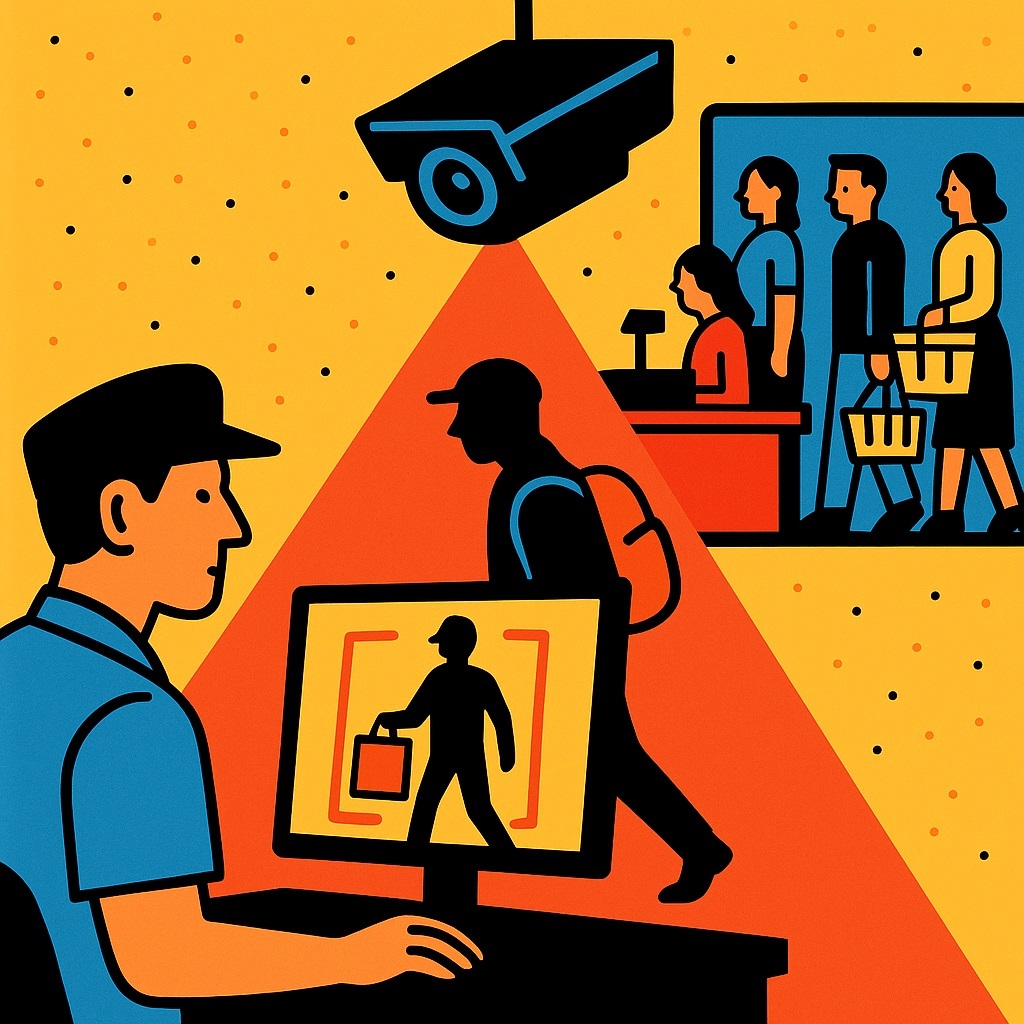
Once upon a time, surveillance cameras were basically glorified VCRs: staring blankly, recording endlessly, and stacking up footage no one ever wanted to watch. Today, they’ve had a serious upgrade. Cameras are morphing into digital detectives — spotting suspicious moves, predicting what comes next, and even telling retailers where to place their billboards. Welcome to the age where hardware doesn’t just watch — it thinks.
From “That’s a Person” to “Unloading Starts in 3…2…1”
Computer vision is a branch of AI that doesn’t just recognize objects — it interprets them. It can detect an open gate, a forgotten bag, or someone quietly trying to sneak merchandise past the checkout. Even better, it’s learning to anticipate events: a truck rolls into the warehouse, and the system knows it’s time to start unloading.
Raising a Digital Guard Dog
Training an algorithm to see is a lot like teaching a stubborn pet. Instead of dog treats, you feed it mountains of data:
- Data collection. Thousands of images and video clips, until the system stops confusing bananas for hammers.
- Neural network design. Choosing whether you need surgeon-level precision or barista-level speed.
- Training. Running the system through countless visual examples until it recognizes patterns.
- Deployment. Installing the trained model into a server or cloud system that works in real time.
Retail: The Ultimate Playground
Stores are ground zero for computer vision experiments. The requests are often oddly specific:
- Detecting empty shelves before customers do.
- Tracking crowd clusters in malls to price ad space smarter.
- Flagging shoppers whose behavior looks suspicious — like oversized backpacks paired with an unusual interest in expensive tools.
Warehouses, meanwhile, want to know exactly how many trucks arrive, what their loads are, and how often deliveries happen. Other industries use vision systems to monitor workflows, enforce regulations, and catch risks before they snowball into serious losses.
The Harsh Reality of Deployment
Retailers dream of a “magic box” you plug in and voilà — instant AI guardian. Reality check: training requires data. Lots of it. And that means filming, labeling, and waiting.
Then there’s the organizational problem: IT teams know servers and networks but not theft patterns. Security departments know theft patterns but not convolutional layers. The bridge between them? Innovation directors. These new corporate players translate between geek-speak and loss-prevention lingo, making sure both sides build something useful.
When There’s No Server Room
Most stores don’t have the luxury of a dedicated server closet. Enter industrial-grade AI chips: compact, dustproof, and happy to run next to your HVAC unit. Without this hardware evolution, computer vision would still be stuck in PowerPoint slides.
AI vs. Humans: Who Wins?
Let’s be clear: computer vision isn’t replacing security staff. It can flag a suspicious action, analyze behaviors, and trigger alarms — but it can’t put a hand on someone’s shoulder. That means fewer passive “screen-watchers” and more guards who react fast when the system nudges them. Humans get sharper focus, machines handle the grunt work.
Eight Years Ago vs. Now
Eight years back, business owners and IT directors treated AI like science fiction. “That’s decades away,” they said. Fast forward to today: companies hire innovation directors who arrive with concrete requests. Not vague dreams of “AI magic,” but real-world use cases like tracking warehouse traffic flows, monitoring shelf stock, and keeping checkout lines under control.
The Road Ahead
AI in security is no longer about hype — it’s about return on investment. From cutting losses to boosting customer trust, it’s turning into a cornerstone of modern business strategy. No, the cameras can’t chase down a thief. But they can prevent the theft in the first place. And in the world of retail and logistics, prevention is the most profitable kind of security.