

If you ask what determines the load in a video surveillance system, the classic answer usually sounds like this: “the number of cameras, resolution, and frames per second.” That’s like saying health depends on “food and sleep.” Formally correct, but in practice it explains almost nothing.
In reality, the load in a modern video surveillance system depends first and foremost on functionality. Not on the brand, not on the Smart sticker on the box, and not even on the number of megapixels. It depends on what the system actually does with the video stream, not just where it stores it.
Historically, video surveillance was an extremely honest craft. The camera watches. The disk records. The archive grows. Sometimes someone even opens it. That’s it. No questions, no thinking, no intelligence. The camera was like an old night watchman: it sees everything but understands nothing.
When “Smart Surveillance” Was Just a Label on the Box
Then came the era of “smart” systems. At least on the packaging. Boxes started shouting buzzwords: Smart DVR, Intelligent Camera, AI Inside. Any box without the word Smart was considered morally obsolete before it even reached the store shelf.

From the marketing materials, you’d think that ten years ago video surveillance was already supposed to:
- understand who is in front of the camera;
- tell a cat from an intruder;
- ignore snow, rain, and cloud shadows;
- and ideally know what you actually wanted to see.
Reality turned out to be more modest. If you read forums and user chats of major brands, the picture is remarkably stable year after year. Every day, in any country, in any language:
- “Detection doesn’t work?”
- “Did you update the firmware?”
And this is not a joke. It’s the universal answer to everything. The detector triggers on wind: update the firmware. Doesn’t trigger on a person: update the camera. The camera won’t connect: update the firmware. Connects, but only on Thursdays: update the firmware. Users update firmware for years. Religiously. With faith. With hope. But for some reason, the miracle never happens.
Problems Systems Face in Real-World Operation

Over time, a whole bouquet of industry traditions gets added:
- a camera from a “beautiful box” won’t connect until you download an update;
- the connection logic is so mysterious that configuring a satellite feels easier;
- configuration requires an old version of Internet Explorer that cannot be installed on a new computer;
- the interface on a modern screen looks like it was designed under a microscope;
- the security system is full of holes, but this is “fixed” by mandatory passwords as long as a phone book.
And all this is not because engineers are bad. It’s because the architecture is old. Sometimes flawed. Sometimes just tired of time.
Why Big Manufacturers Don’t Rewrite Everything from Scratch
A logical question arises: if everything is so bad, why don’t big brands just rewrite the software?
Because it’s painful. It means breaking compatibility, supporting old devices, and explaining to users why “it worked yesterday but not today.” For users, it means updating, reconfiguring, reflashing, and reading forums all over again.
Network architecture, especially in large installations, hates sudden moves. Any “improvement” can turn into a week of night call-outs and words that are not fit for publication.
Why SmartVision Appeared at All
That’s exactly why SmartVision took a different path from the start. Not “let’s carefully add one more checkbox to a recorder’s settings,” but “let’s rebuild the very idea of video surveillance using modern technologies and AI.”
No binding to specific hardware. No need to replace cameras just to get a new feature. No endless firmware race.
What Actually Creates Load in a System
Now to the most important part: load. If a system simply records an archive, everything is quite simple. The video stream is taken from the camera and written “as is” into a container, for example MP4. H.264 means H.264. H.265 means H.265. Minimal cost, minimal load. It works fast.
But the moment you want to analyze what’s happening, the magic ends.
Frame-by-Frame Processing: The Source of All Evil and All Progress
Analytics doesn’t need a stream, it needs frames. Each frame must be:
- decoded;
- analyzed;
- used to make a decision: keep recording or not.
First comes a lightweight check:
- is the image frozen;
- are pixels changing at all;
- is there actual motion, not just noise.
If motion exists, the frame goes further, to more complex detectors: people, objects, faces, smoke, fire, sound, depending on the scenario.
To prevent the system from dying under load, frame sampling is used. There’s no need to analyze all 30 frames per second. Sometimes 10 is enough, sometimes even less. It’s a compromise between accuracy and common sense.
How CPU and GPU Participate in Video Analysis
Every frame decode is load. Every detector is computation. All of this works best on a GPU. But you can build a smart system on a CPU as well, as long as you understand the limits.
And here’s the uncomfortable truth: it’s impossible to turn a cheap old recorder into a modern AI platform with a “firmware update.” This is not about desire. It’s about physics.
Why PC Software Beats Recorders
Software is flexible. It’s not tied to a specific camera manufacturer. It doesn’t become obsolete together with a piece of hardware.
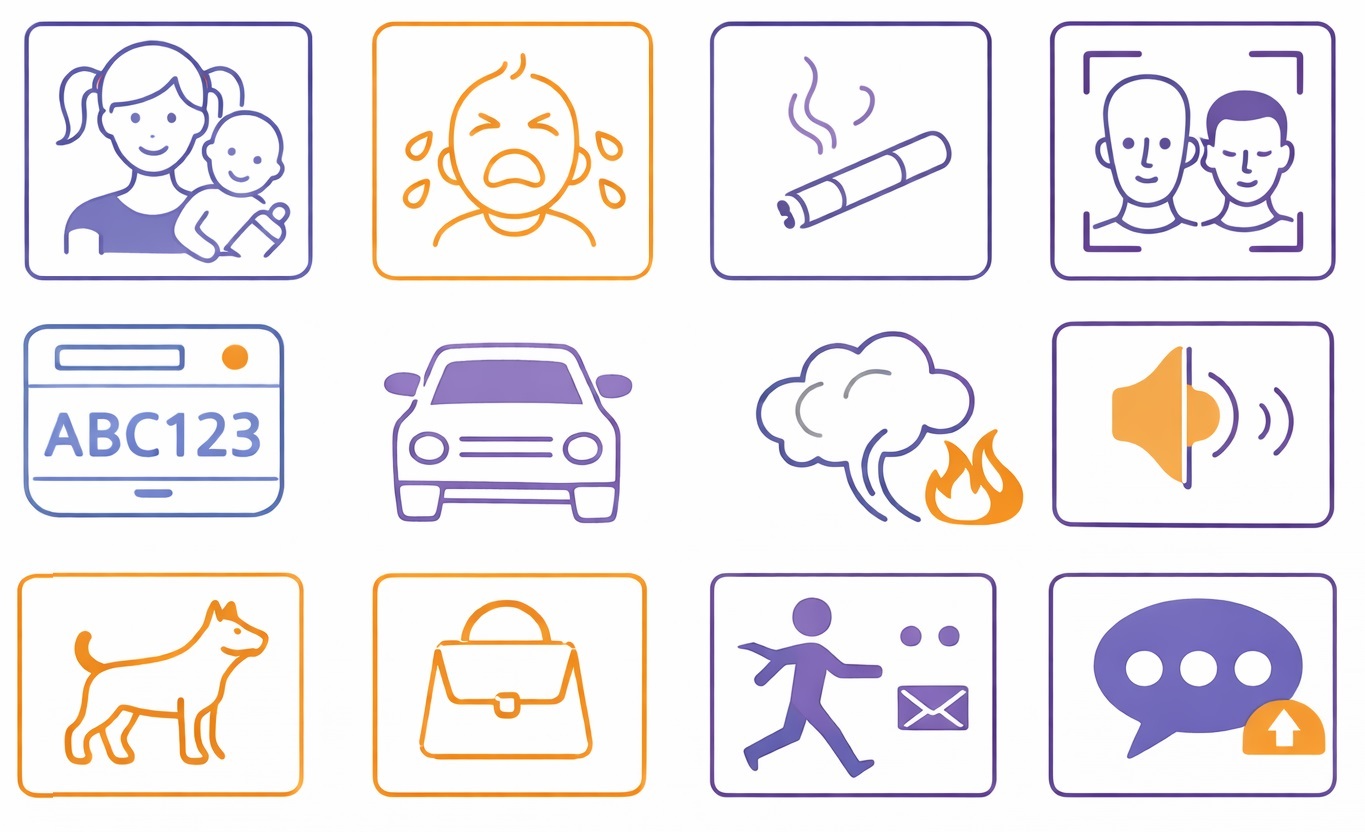
Today you need simple recording. Tomorrow, parking analytics. The day after tomorrow, behavior analysis of a nanny in a child’s room: crying, shouting, adult presence nearby.
If you live in the world of recorders, that means:
- a different manufacturer;
- different cameras;
- incompatibility;
- a new budget.
If you live in the world of software, it’s just a new module.
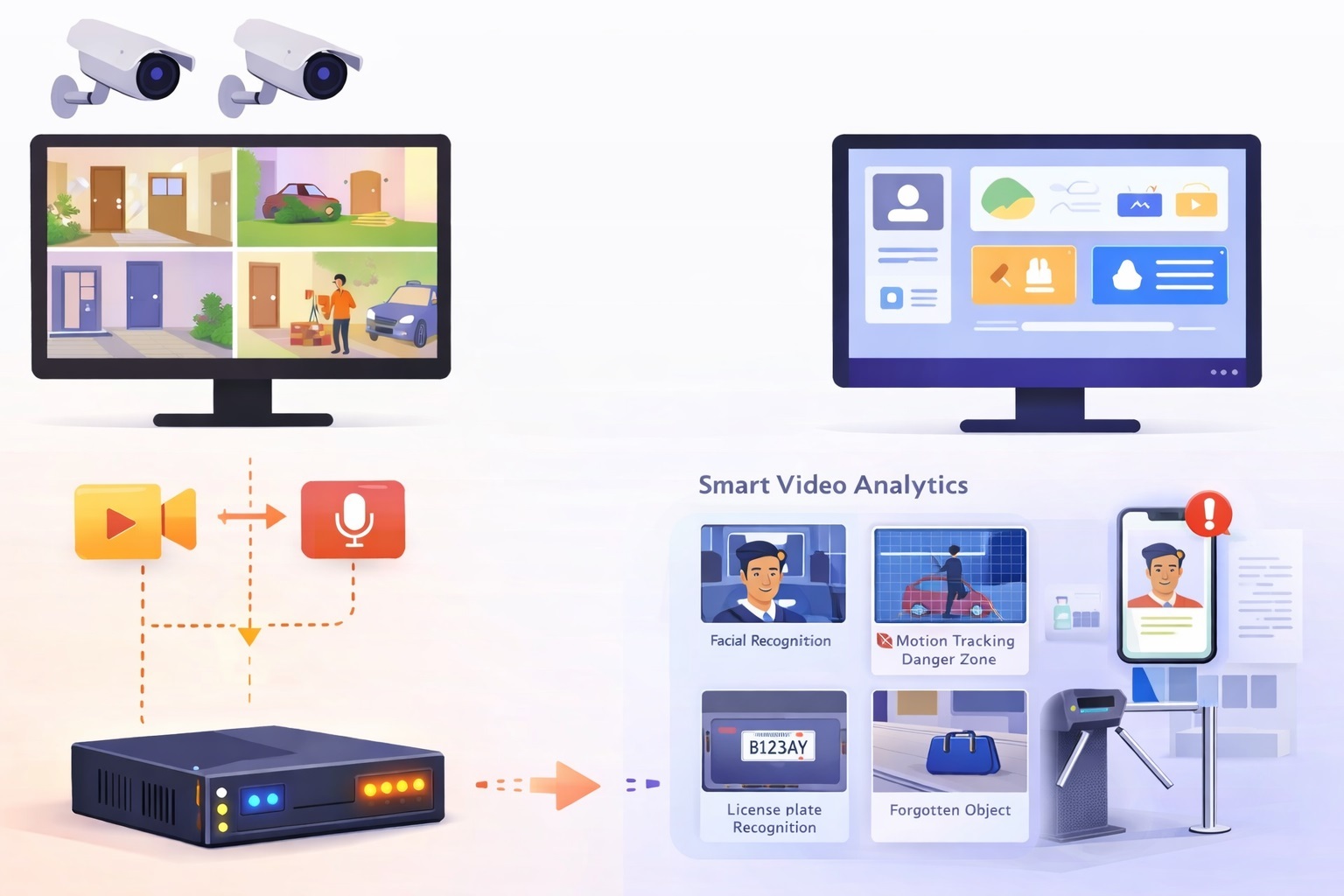
Detectors Grow Faster Than Hardware
The number of detectors is growing exponentially:
- faces;
- similar faces;
- gender and age;
- license plates;
- smoke and fire;
- animals;
- objects;
- sound;
- speech transcription.
Major manufacturers have been advertising “smart devices” for years, but if you read support forums, you’ll see a familiar picture: the December firmware is outdated in January, the January one in February. And so on, for ten years straight. It sounds like a joke. But for some reason, it’s not funny.
The Real Advantage of Specialized Software
Specialized software allows you to:
- take any camera, even the cheapest one;
- make it smart;
- use modern neural network detectors;
- and not replace hardware every two years.
On top of that, small teams are far less clumsy. They are responsible for results, not for “buttons.” If something doesn’t work, it’s the team’s problem, not an “operational peculiarity.”
Recorders Are Still Needed, Just Not for Everything
A recorder is a great tool for basic tasks:
- continuous recording;
- standard scenarios;
- minimal logic.
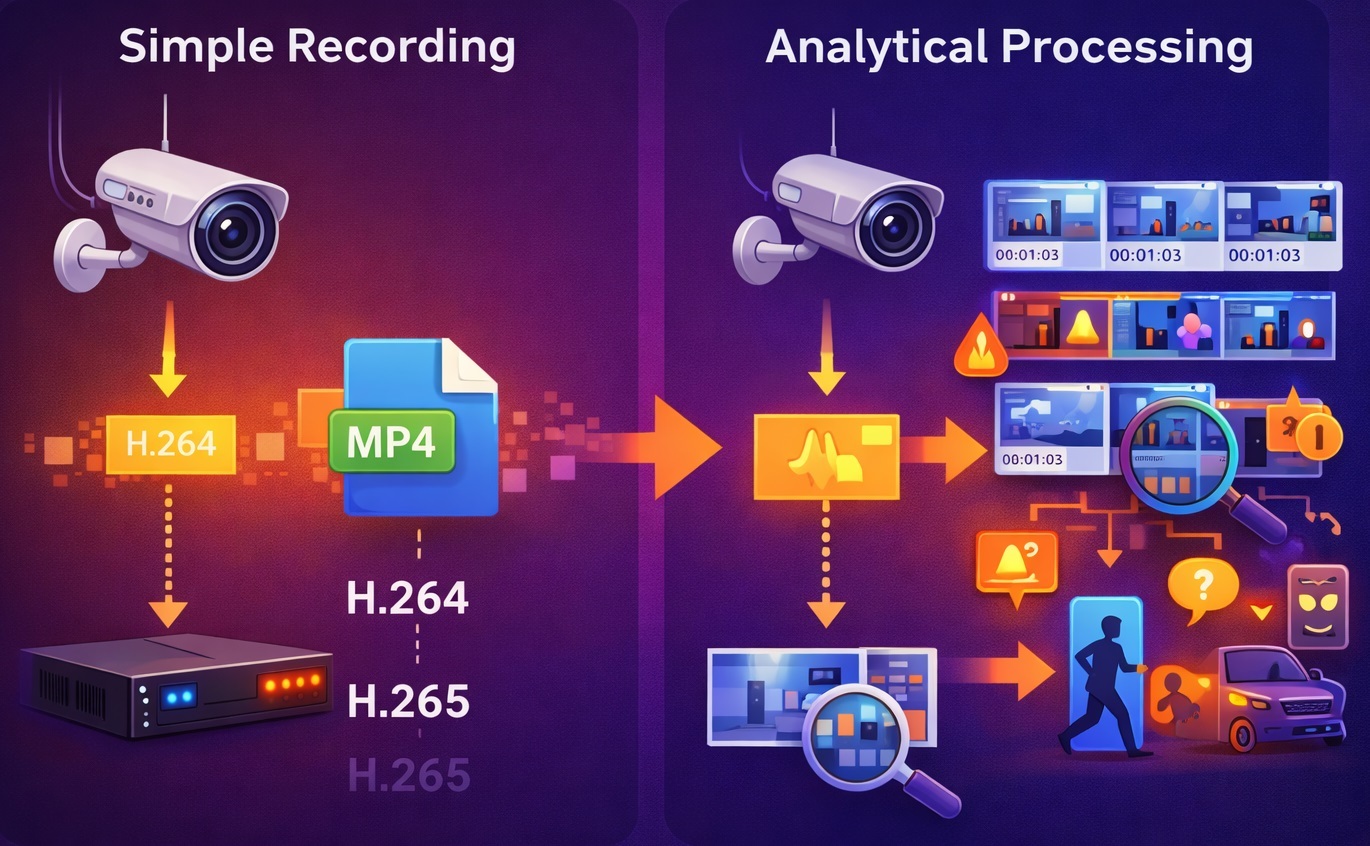
But if you need to understand what is happening, not just store terabytes of video, you need software that turns:
- video and sound into data;
- data into events;
- events into actions.
What’s Already Done and What’s Next
In 2025, SmartVision implemented:
- license plate recognition for multiple countries;
- OCR and QR codes;
- voice transcription;
- object detection;
- face recognition and similarity search;
- smoke and fire detection;
- archive, events, time-lapses;
- cloud access and much more.
In 2026, we’re moving further. New detectors, new scenarios, without requiring “super-smart” cameras that cost a fortune.
You can buy a camera for the equivalent of $10, install software on a regular computer, and get functionality that not long ago existed only in presentations.
The Shortest Possible Summary
The video surveillance industry is maturing. Slowly. With creaks. Sometimes with rollbacks.
But the movement is not toward new boxes. It’s toward software, data, and meaning.
And we’re just doing our job. No promises of magic. Just an understanding of how it actually works.