
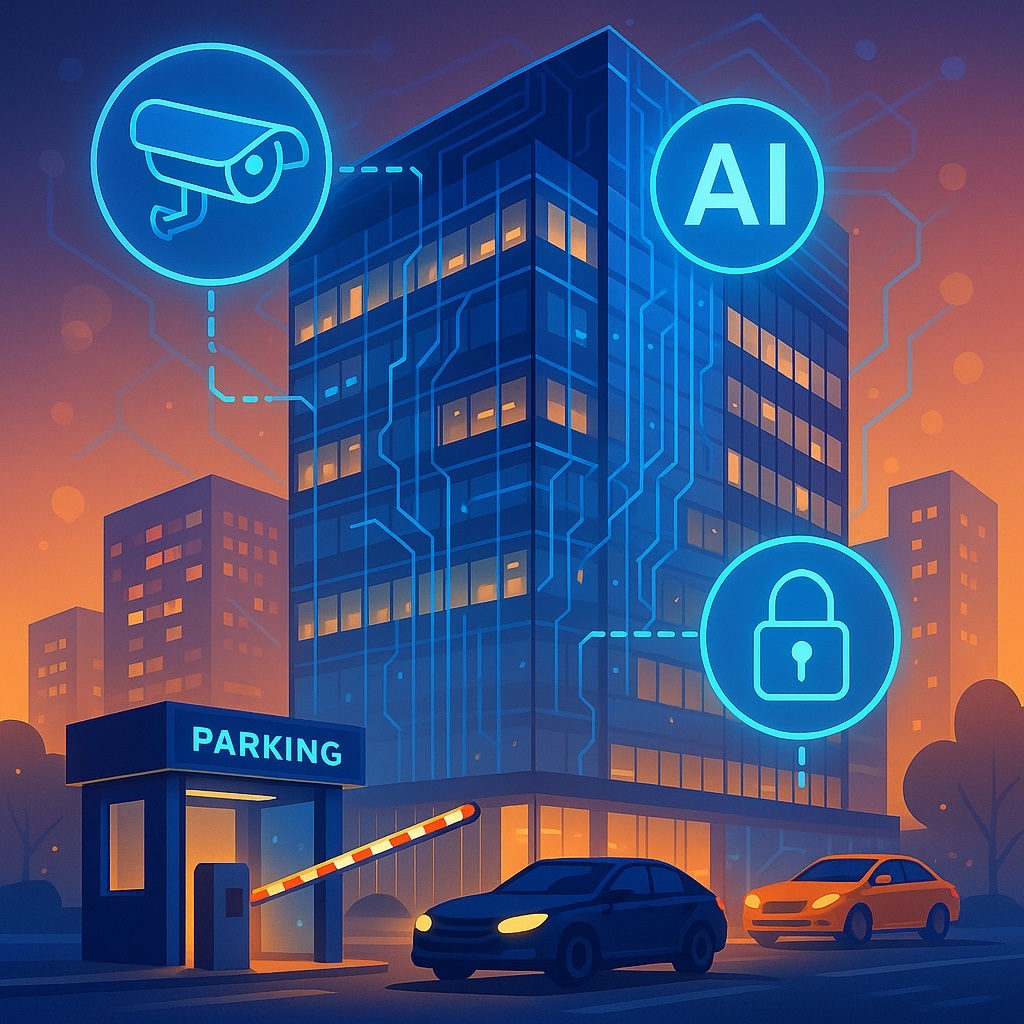
Once, an office was simply a place you came to: sat at your desk, worked. Today, choosing the right space means far more than whether it has an espresso machine and functioning air-conditioning. The fusion of technology, comfort, sustainability and security is transforming commercial real estate into something greater — into intelligent complexes where the building is coordinated not just by a guard at the lobby, but by algorithms.
Why AI matters right now
Tenants today expect more than a “workspace”; they expect an ecosystem where comfort, safety and efficiency are seamlessly integrated. In that environment, AI acts as an “invisible director,” coordinating hundreds of thousands of data points so the building lives and breathes along with its users.
In the U.S. commercial real estate (CRE) sector, AI is delivering benefits in three main categories:
Sustainability
When AI analytics manage ventilation, lighting and climate systems, they learn from how people behave in the building. Energy consumption drops, emissions shrink, systems operate with precision and intention. This isn’t just automation—it’s an ecosystem adapting to real conditions.
Comfort / Convenience
AI understands that the building must adapt to its inhabitants. Algorithms analyse space usage and adjust climate, lighting and ventilation accordingly. If a zone is under-utilised, the systems shift into an economy mode. All of this makes workspaces more flexible, comfortable and cost-efficient.
Safety and access control
Physical passes and cards are becoming optional. AI systems allow employees and visitors to freely utilize space, track flows, flag anomalies and ensure 24/7 access. This not only speeds operations—but raises the overall level of security.
When AI analytics manage ventilation, lighting and climate systems, they learn from how people behave in the building. Energy consumption drops, emissions shrink, systems operate with precision and intention. This isn’t just automation—it’s an ecosystem adapting to real conditions.
Comfort / Convenience
AI understands that the building must adapt to its inhabitants. Algorithms analyse space usage and adjust climate, lighting and ventilation accordingly. If a zone is under-utilised, the systems shift into an economy mode. All of this makes workspaces more flexible, comfortable and cost-efficient.
Safety and access control
Physical passes and cards are becoming optional. AI systems allow employees and visitors to freely utilize space, track flows, flag anomalies and ensure 24/7 access. This not only speeds operations—but raises the overall level of security.
How an intelligent building works in practice
In the old days, video surveillance simply recorded what happened. Now, it thinks.
AI analytics in cameras recognise faces, track movement, analyse behaviour—from a simple queue at the turnstile to potential security incidents. Algorithms automatically determine who entered the building, who lingered in a restricted zone and who is attempting unauthorised access.
Facial recognition replaces pass-cards and improves access control accuracy. Detectors for abandoned items, crowd clustering or suspicious activity allow security teams to respond instantly, rather than after the fact.
Traffic-flow analytics help predict peak hours, optimise movement routes and reduce area overload risks. AI also analyses image quality and camera health, detecting non-working or obscured devices.
A separate component of the intelligent infrastructure is parking automation. AI systems with license-plate recognition manage gates, record entries and exits, calculate parking times and provide contactless access. Visitors don’t need paper tickets—the camera reads the plate and opens the gate automatically. For tenants, it’s time saved; for operators, fewer personnel and fewer errors; for the building, another step toward full autonomy.
Cameras therefore become more than just the “eyes” of the building—they become a sensory system that sees, remembers and reacts. Integrated algorithms merge video streams with other data: lighting, access, climate—creating a unified digital security model. Thus the building gains the ability to protect itself and serve users, recognising non-standard situations even before a human might.
What owners should pay attention to
Technology delivers powerful tools—but demands a thoughtful approach.
Just because something is “technically possible” doesn’t always mean it’s necessary. Sometimes a simpler, more reliable solution is better.
Surveillance and management systems should function autonomously—even without Internet connectivity. When deploying cloud solutions, it’s vital to know exactly which functions remain active if connection fails. Legal and operational documentation must pre-plan responsibilities and outage scenarios. A building is not a laboratory for experiments—it’s a place where technologies must work reliably.
Looking ahead
The next step is the development of self-learning security systems. AI will be able to predict where an incident may occur and proactively increase monitoring in those zones. Cameras and sensors will exchange data among themselves, forming a flexible surveillance network without “blind spots”.
Buildings of the future won’t simply be secured—they’ll be aware, capable of recognising threats, evaluating risk and acting preventively. And the parking lot, where a car is recognised by its plate and admitted without stopping, will just be one of the first edges of that new human-architecture interaction.
Once, an office was just a box with windows and security. Now it’s a living organism, sensing, adapting and learning. Artificial intelligence becomes its nervous system—not just watching but understanding. Smart buildings aren’t science fiction—they’re the logical next step in evolution. The question is no longer if AI will be in security and parking systems, but who will be the first to trust it with guarding and managing their space.