
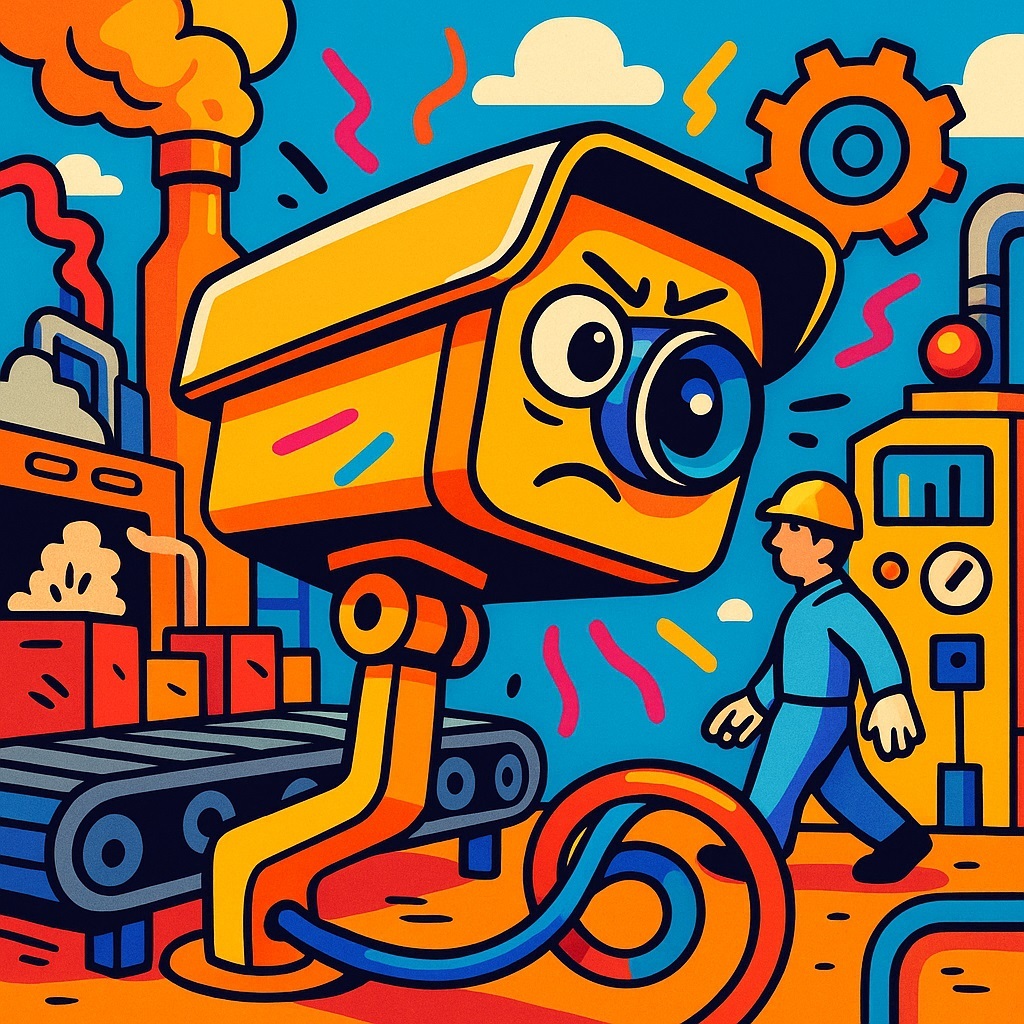
Humans come with two eyes and two ears — which is cute, but wildly insufficient for understanding a modern industrial site. Factories, on the other hand, deal with noise, heat, motion, dust, chaos, forklifts doing questionable turns, and machines that behave like they woke up on the wrong side of the assembly line.
But here’s the plot twist: in the 2020s, factories got a superpower humans can only dream of. They can have hundreds, even thousands of eyes and ears, all working 24/7 without coffee, overtime pay, or a union rep.
And no, it’s not science fiction. It’s video surveillance plus industrial analytics — finally used the way they should be.
Cameras Become the Eyes: The Factory Finally Sees Itself
Security cameras used to be the industrial equivalent of wallpaper: they existed, but mostly for legal comfort. They recorded everything, analyzed nothing, and the footage got watched only after something went boom. Today those same cameras are the factory’s visual cortex.
They instantly spot things like:
- a worker stepping too close to a hazardous area,
- a conveyor slowing down,
- a box sitting at a suspicious angle,
- a puddle of oil that shouldn't exist,
- smoke — the bad kind, not from welding,
- a motor housing starting to discolor from heat.
What used to be a “recording device” is now an active sensor network. And unlike humans, a factory can simply install 50 more eyes if it wants a better angle. Try doing that with employees. HR will have questions.
Microphones and Sensors Are the Factory’s Ears and Nerves
Sight is great, but factories also talk — loudly. Machines squeak, rumble, click, rattle, hiss, and hum in ways that would drive any audiophile insane.
Microphones, vibration sensors, thermal probes — these are the factory’s ears and nerve endings.
They pick up things no human hearing test could detect:
- early-stage bearing chatter,
- subtle valve oscillations,
- a compressor struggling to breathe,
- ultrasonic air leaks that sound like silence to humans.
Combine visual and audio data, and the plant stops being a collection of machines — it becomes a sensory organism.
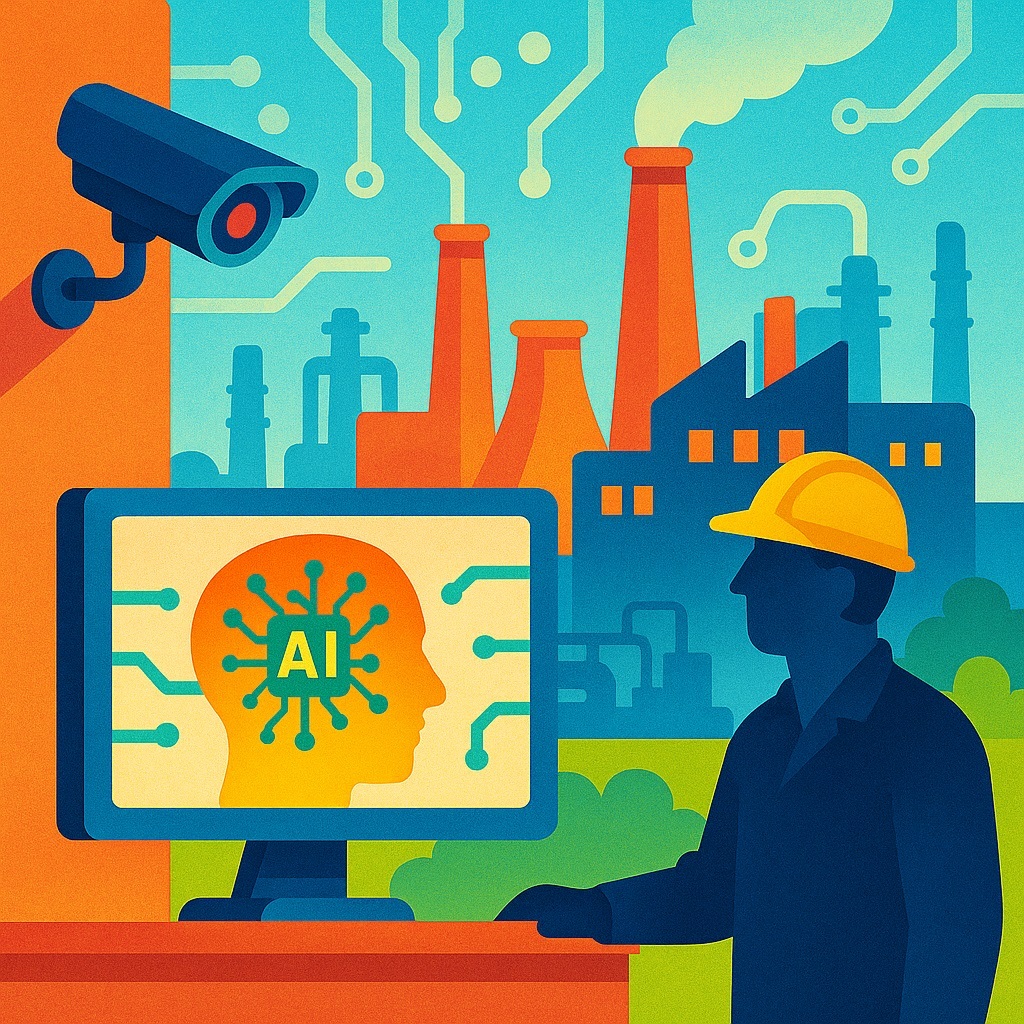
Why a Thousand Eyes Isn’t Paranoia — It’s Engineering
Put three human operators in front of a giant video wall, and within 20 minutes their brains go into screensaver mode. Call it biological power-saving.
AI doesn’t have that issue.
- One camera works as hard as the first hour of a night shift.
- Fifty cameras work just as hard.
- A thousand still don’t complain or scroll social media.
Machines don’t get bored. They don’t miss details. They don’t “assume it’s fine.” A factory doesn’t need paranoia — it needs attention. AI delivers exactly that.
When You Give a Factory a Sensory System, Intelligence Follows
Eyes and ears are only half the story. The magic happens when the signals merge. A camera sees a technician approach a machine. Audio picks up abnormal vibration. A sensor detects temperature drift. The control system tracks a drop in torque.
AI connects the dots and says: “Time to stop this before it stops itself.”
That kind of multi-sensory reasoning used to require a veteran engineer with Jedi instincts. Now it comes built-in.
Analytics Turns the Factory from Reactive to Proactive
The old workflow was simple: “Something broke → panic → fix it → hope for the best.”
The new workflow: “Noticed → predicted → alerted → prevented.”
Give a factory a thousand sensors, and it starts acting like an adult instead of a teenager ignoring warning lights on a car dashboard.
Cameras Aren’t for Watching — They’re for Measuring
A lot of people still think cameras are installed “to keep an eye on workers.”
Nope. Cameras are installed to keep an eye on physics, processes, and patterns. A camera is basically a high-resolution industrial sensor.
From video alone you can extract:
- cycle times,
- throughput,
- motion patterns,
- downtime causes,
- PPE compliance,
- conveyor performance,
- early signs of mechanical wear,
- visual product defects.
It’s not surveillance — it’s telemetry.
The Future Belongs to Factories That Can Feel Everything
Once a factory can see and hear itself, it stops flying blind. It becomes:
- safer,
- more efficient,
- less wasteful,
- more predictable,
- easier to maintain,
- and far cheaper to operate.
Not because it installed a sci-fi robot army — but because it finally gained sensory awareness.
A factory with a thousand eyes and ears isn’t a dystopia. It’s simply a plant that knows what’s happening, learns from it, and improves itself. Humans evolved sensors over millions of years. Factories got theirs in one decade — and they’re already using them better.