
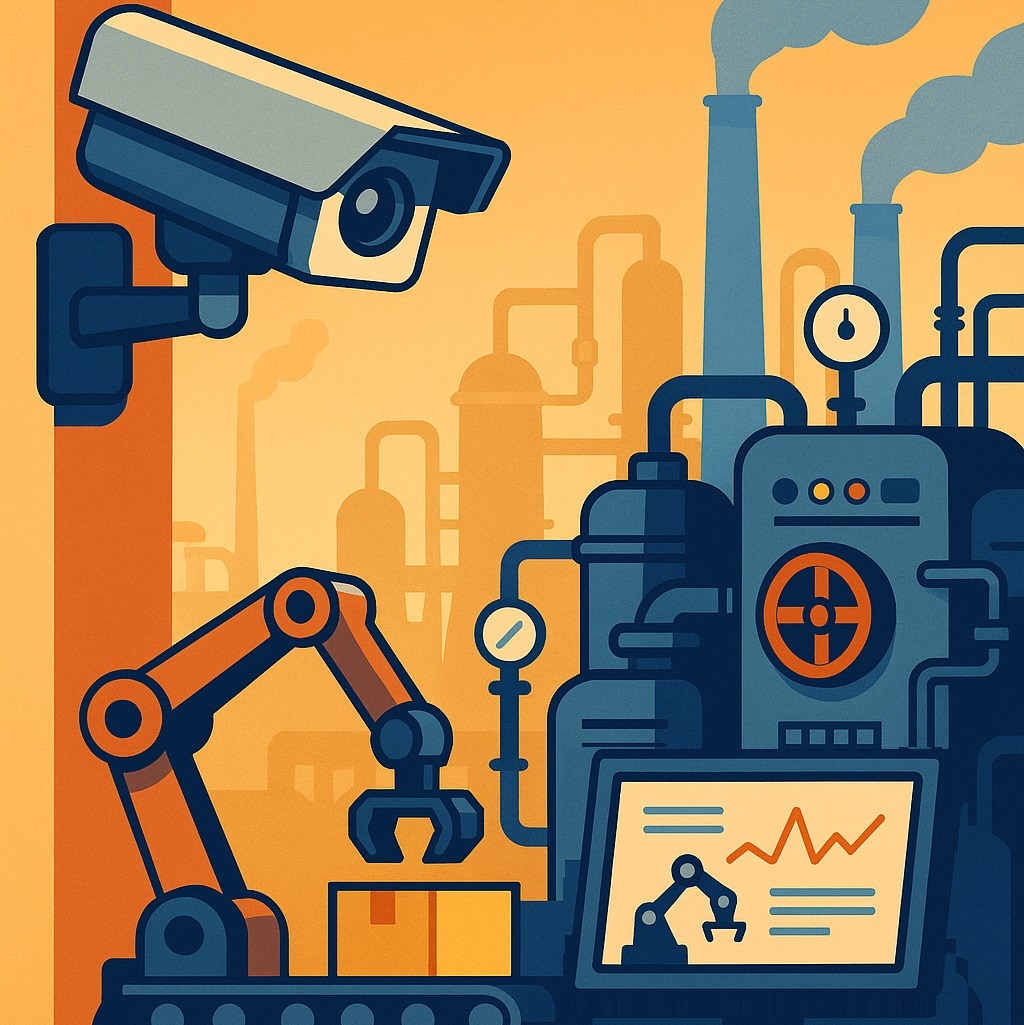
Industrial manufacturing is going through the biggest identity crisis since electricity replaced steam. For decades, progress was measured in tons, horsepower, and “how loud the machine screams but still runs.” Now the main fuel is data — and every machine, pump, conveyor, and pipe seems desperate to overshare.
Cameras stare at conveyor belts like tired, underpaid security guards. Controllers log every twitch. Sensors measure anything that can vibrate, heat up, or leak. The factory has basically grown a nervous system.
And in the middle of this sensory overload, AI sits there like the world’s most polite intern: “Sure, I can help… but only if you tell me what’s actually going on.”
Step One: Before Intelligence Comes… Surveillance
(Yes, it sounds dystopian — but stay with me.)
The first big problem in industrial AI isn’t technology. It’s the gaping void where reliable data should be. Many plants have thousands of sensors and still produce logs that read like a teenager’s diary:
- “Everything is fine.”
- “Still fine.”
- “Totally fine, stop asking.”
AI can’t work with that. It needs real, consistent, boring, unsexy data. So the first step is painfully obvious:
- Put up cameras that actually record.
- Add basic vibration and temperature sensors.
- Save all that data somewhere that isn’t a dusty Excel file named FINAL_VERSION_3.xlsx.
It’s not expensive. It’s just… discipline. And factories excel at many things, but discipline in data collection? Ehh, work in progress.
Video Analytics: Cameras That Actually Do Something
Industrial cameras used to be glorified baby monitors for machines. They recorded everything but understood nothing. Now they’ve grown a brain.
Modern video analytics can:
- Detect flames in a millisecond
- Spot workers wandering toward a “do-not-wander-here” zone
- Track assembly sequence errors
- Check cleanliness in food production
- Monitor forklift behavior (no, Steve, drift-turning pallets is not a sport)
And guess what? You probably already have cameras. Just add an AI layer and suddenly your CCTV goes from “passive observer” to “hyperactive lab assistant that refuses to miss anything.”
The biggest perk? AI doesn’t get bored, hungry, or distracted by group chats.
Quality Control: Everything Gets a Microscopic Stare
Remember the old way: look at one item, shrug, assume the other thousand are fine.
Now AI checks every single product:
- Packaging defects
- Tiny cracks
- Weird color spots
- Shaky solder joints
- Misaligned labels that would offend even your most laid-back customer
Lighting + camera + trained model = industrial superpowers.
Manufacturers suddenly discover the uncomfortable truth: the line produces a lot more defects than humans ever noticed. But hey — at least now you can fix them.
Predictive Maintenance: Goodbye Calendar, Hello Reality
The classic servicing routine works like dentist visits — you go because it’s time, not because something hurts. But machines aren’t teeth. They will happily fail exactly between scheduled maintenance windows.
AI flips the script. With vibration, current, and temperature data, models can predict failures before they happen:
- Bearings that hum wrong
- Pumps slowly choking
- Motors developing “mystery tremors”
It’s not magic — just statistical pattern recognition with better PR. The result? Maintenance happens when it’s needed, not when the calendar nags.
Energy Efficiency: Fixing the Factory’s Bad Habits
Most factories have the energy discipline of a teenager with their first credit card. Air compressors run overnight, chillers go full blast for no reason, heaters and ventilation fight like divorced parents.
AI analyzes consumption patterns and quietly whispers: “Maybe… stop wasting 30% of your electricity?”
Even a simple model can cut costs dramatically without replacing equipment. Just smarter scheduling and pattern detection — like discovering your cooling system throws an all-night rave while no one’s working.
Safety: From “Who Did It?” to “Don’t Do It.”
Old safety systems show you what went wrong after someone gets yelled at.
AI shifts safety into the preventive mode:
- Detects missing PPE
- Watches movement near hazardous areas
- Spots smoke, heat, or abnormal behavior before alarms
It even tells the difference between welding sparks and a real fire (which is more than some supervisors can claim on a Monday morning).
Small Factories: AI Without the Corporate Budget
If you think AI is only for giant factories with private clouds and armies of consultants — good news. It’s not.
Two cameras, one cheap sensor, a regular PC — and small shops can get:
- Utilization tracking
- Scrap analysis
- Downtime reports
- Workflow visualization
No seven-figure ERP. No digital twin with dramatic animations. Just straightforward, practical intelligence.
Integration: The Island Problem
Every facility suffers from data Balkanization:
- Video here
- SCADA there
- Production logs floating around on USB sticks
- And one laptop running Windows 7 because “it still works”
AI can only shine when these islands connect.
Example:
Camera sees conveyor stop → AI flags MES → MES adjusts schedule → ERP updates shipment.
Boom — digital reflex arc. But don’t try to build a digital twin if you’re still emailing screenshots around.
Factories Are Learning to Think
The future factory isn’t sci-fi. It’s simply one that:
- Observes itself
- Analyzes constantly
- Predicts failures
- Optimizes energy
- Learns from mistakes
And it all starts with the most boring part: consistent observation. Cameras. Sensors. Data hygiene. Once those are solid, the rest builds naturally. At some point, the plant stops “trying to adopt AI.” It becomes intelligent — quietly, methodically, and one data stream at a time.